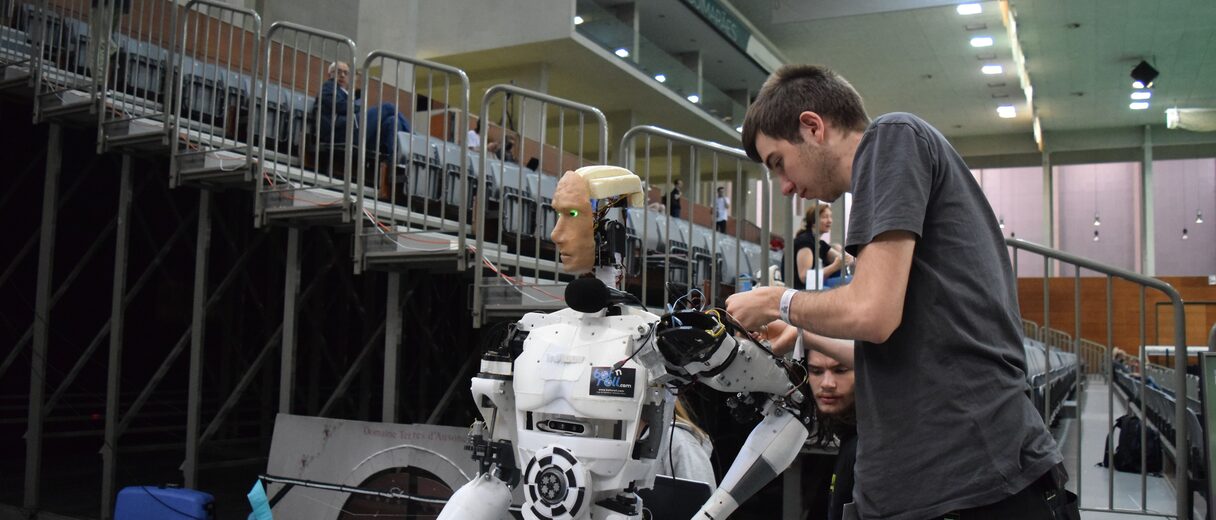
CAPTURE · 60 Hz
FIG. 01 — DEMONSTRATION CAPTURE
We don't build robots. We build the training data that teaches them — demonstration capture, curation, simulation, and the evaluation sets that tell you whether a policy is actually ready.
Teleoperated and human-worn collection of real manipulation episodes — synchronized video, depth, force, and joint state at control rate.
Segmentation into tasks and sub-skills, success and failure labeling, and the quality pass that removes episodes a model shouldn't learn from.
Scene and asset generation, domain randomization, and synthetic episodes that cover the long tail real capture can't reach economically.
Held-out task suites with scoring criteria, so you can measure a policy honestly before it touches a production line.
Rigs, protocols, and trained operators collecting episodes against a defined task taxonomy.
Sync, segment, label, and filter. Every episode scored for quality before it enters the set.
Normalized schemas, standard action spaces, and dataset cards documenting exactly what's inside.
Held-out suites and rubrics that report where the policy succeeds, fails, and recovers.
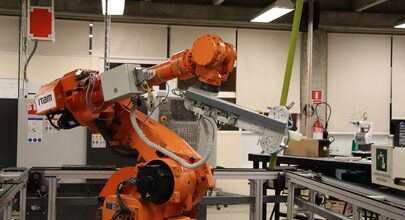
Controlled cells where a task taxonomy can be covered densely and repeatably.
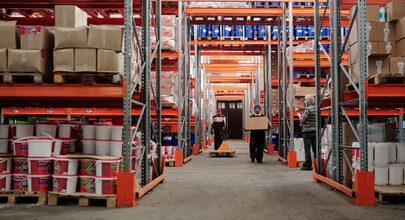
On-site collection in real conditions: real clutter, real lighting, real time pressure.
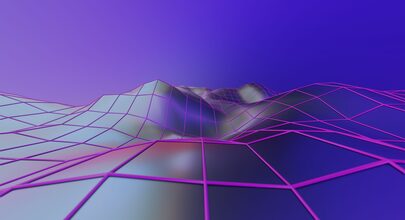
Synthetic coverage of rare and unsafe cases that would be impractical to stage physically.
Model architectures are converging and increasingly available to everyone. What separates a demo from a deployment is coverage of the awkward cases — the misaligned part, the wet surface, the recovery after a drop. That coverage is a data problem, and it is the one we work on.
Scope a data program →